Showing posts with label fantasy. Show all posts
0

Tolkien for the Holidays

Posted by Marie on Wednesday, January 21, 2015 in , ,
Christmastime is J.R.R. Tolkien.

 As a kid, the holiday break has always been my chance to read Lord of the Rings in one go. Then in college, watching The Lord of the Rings film series was a December tradition with my friends, that later turned to watching The Hobbit trilogy post-college. I cannot remember a time that I haven't turned to Professor Tolkien for some holiday cheer. This year is no different. But this time, I'd took on Professor Tolkien's earlier works, particularly The Hobbit (published on 1937) and Letters from Father Christmas (published posthumously on 1976).

Anybody who had read Lord of the Rings most likely would have also read The Hobbit (or There and Back Again), or at the very least would have watched it on the big screen.

It is the story of Bilbo Baggins, a quiet, normal hobbit living in the very normal suburbs of Bag End, Hobbiton. Hobbits are a race similar to men but shorter in height. The hobbits sensibly love creature comforts like second breakfasts and snug, comfy holes in the ground. Bilbo was recruited by the wizard Gandalf for a quest to the Misty Mountain, to recover treasures that were guarded by the dragon Smaug. He is joined by twelve dwarves led by Thorin Oakenshield, the King under the Mountain. A lot of things happened on the course of their adventures, culminating into a battle between different races, all vying for the dragon horde.


I had always read the story (yes, I forgot how many times I've reread the book) as being the tale of Bilbo Baggins' evolution from a scared, timid hobbit to a selfless hero and full-fledged leader. That a person sometimes starts his journey as one thing and comes home as another, changed irrevocably, (sometimes for good, sometimes for bad, but most of the times for both) is a constant theme in Professor Tolkien's stories, not just in his Middle-earth books, but also in his other writings. In The Hobbit, it can be summarized by Bilbo's poem during his return to Hobbiton:

"Roads go ever ever on,
Under cloud and under star,
Yet feet that wandering have gone
Turn at last to home afar.
Eyes that fire and sword have seen
And horror in the halls of stone
Look at last on meadows green
And trees and hills they long have known."

As a veteran of the First World War, he certainly knows how war permanently changes people, exactly like how fierce battles and the death had changed Bilbo.

"One has indeed personally to come under the shadow of war to feel fully its oppression; but as the years go by it seems now often forgotten that to be caught in youth by 1914 was no less hideous an experience than to be involved in 1939 and the following years. By 1918 all but one of my close friends were dead." (Preface to the second edition of Lord of the Rings)

So yes, two conclusions. The first is that The Hobbit is not some silly Lord of the Rings prequel published primarily for kids; and two, that there's nothing like war and death to make you appreciate the things that you have and the existence of people who love you.


Let's now go to something lighter. In 1920, J.R.R. Tolkien's son, the then three-year-old John, received a letter from Father Christmas.

Father Christmas described in words, pictures, and even poems his house at the North Pole, his assistant, Polar Bear (or P.B.), his secretary, the elf, Ilbereth, P.B.'s mischievous nephews, Paksu and Valkotukka, and other various characters which includes snow elves, red gnomes, snow men, cave bears, and nasty goblins. For the next twenty years, these letters regularly arrive in the Tolkien household during Christmastime, while reply letters made by the children (John, then Michael, Christopher, and finally Priscilla) mysteriously vanish from the fireplace.

Throughout their childhoods, the Tolkien brood were regaled stories of the adventures and misadventures of Father Christmas, Polar Bear, Ilbereth, and the rest of his household, from the time the North Pole broke, to when they needed to move to another house, to when Father Christmas lit some of his wonderful fireworks to celebrate the holiday, to when P.B. got lost in the caves, to the times of the goblin attacks, and their successful defenses. It is very easy to note how strikingly similar Father Christmas to the wizard Gandalf, and, as you can see in the image on the right, P.B. to Beorn, the mysterious man-bear in The Hobbit.


The 1937 letter is funny because Father Christmas mentioned to the children that he initially though of sending them this book 'Hobbits' (which he had been sending loads to other children - mostly second editions), but he thought they might have already have many copies (duh) so he had instead sent them another 'Oxford Fairy Tale' (which I am now intrigued into finding a copy).

By 1943, most of Professor Tolkien's children had grown up (John is 26, Michael is 23, Christopher is 19, and Priscilla is 14). Father Christmas' missive that year was a letter of goodbye. He also notes that his messengers is calling the year "grim" (indirectly referring to World War II), but is glad that in the children's household, it is not as miserable as they were expecting it would be.

"... I shall not forget you. We always keep the old numbers of our old friends, and their letters; and later on we hope to come back when they are grown up and have houses of their own and children."

Which the Tolkien children did. They kept the letters and, three years after Professor Tolkien's death, compiled it into a book with Christopher's wife as the editor. I personally like it. It is a testament of a father's love and willingness to provide boundless imaginative delight to his children. I am glad that the Tolkien family published it since it had now also provided joy to other children of various ages.


|
0

More Minds - Carol Matas and Perry Nodelman

Posted by Marie on Wednesday, October 17, 2012 in , , ,
More Minds - Carol Matas and Perry Nodelman; ISBN: 0-590-39469-X; Fantasy, Young Adults; Scholastics, 1998.

(This review was originally posted on my multiply page on January 25, 2009.) 
 
Reading this book is like watching a full-length kiddie movie, the kind shown on Disney or Cartoon Network. And it is fun, if a bit surreal. What impressed me is that the premise of everybody having a too tremendous power – being able to change reality to suit themselves –is shown as not being the deux ex machina readers expect it to be (well, most of the time anyway). Unfortunately, the reason why the story was enjoyable, its bizarreness, is also its weakness; the story became too confusing, with incoherent storyline shortcuts done to quickly wrap up the plot. In short, it reads like it had been severely edited to keep it short, presumably not to tax out the attention span its target readers – children. It’s either that or they are planning to make a sequel. Either way, it is a good way to spoil a decent fantasy. Way to go Scholastic. Coupled with slightly unappealing lead characters, I give this a 4 out of 5.

|
2

Dragonhaven - Robin McKinley

Posted by Marie on Wednesday, October 17, 2012 in , , ,
Dragonhaven - Robin McKinley

(This review was originally posted on my multiply page on February 3, 2009.)

Once upon a time, there was a prince who lived in an isolated forest/mountain kingdom. His mother had recently died thus making the king very sad and at the same time very protective of his only family. But the prince chafed and the king reluctantly allowed him for a solo trek through the realm. But whether through chance or fate, the prince had instead met a dying dragon - a dying mother dragon, with one of her dragonlet still breathing...


Well, not really. While the premise sounds like a typical high-fantasy dish, let me assure you it is not. The "kingdom" is an American forest park - think Yellowstone - in a modern world very similar to ours. The "prince" is Jake Mendoza, the teenage son of the Park Director. And while dragons are real, they are more or less treated ordinarily, an endangered species yes, but nothing that biologists and the rest of the scientific community couldn't explain.

Now if you think that is all there is to this story, then you don't know how adept Robin McKinley is in writing fantasy.

The fantastic and the mundane, the magical and the normal intertwine in this wonderful story. The story of a boy and his extraordinary "pet" may had been the stuff of many children's book and movies ("Free Willy" was the first thing that came to mind, then Naomi Novik's equally wonderful "Temeraire" series was the better second) but Ms. McKinley placed a fresh new twist to it. By making dragons commonplace and familiar in Jake's world, she had instead (and perhaps deliberately) emphasized their uniqueness to us readers who are bereft of dragons in OUR world.

The most contentious of the tools that Ms. McKinley used was the one many other readers claim made the book horrible - her use of the first-person narrative form. The assumption was that Jake was forced to write about his experiences with the dragons a few years back and that any way of writing his memoir will do, despite his lousy (to put it mildly) writing style. And yes, there are times that I can't blame them since Ms. McKinley might have put the laid-back tone a little too far sometimes. For example, I can't believe that a 22-year old guy (at the time of the supposed writing), someone who had supposedly aced all his high school aptitude exam, use the word "amazinger" in any way possible. Not to mention wasting a few pages botching up his explanation of how "dragon telepathy/language" works (don't ask, I don't understand it myself).

Yet it was strange that many people can't get past the writing to see the gem that is the story itself (just goes to show some people can be quite anal-retentive about what they think should constitute good writing *shrug*). Despite taking me aback for a few pages at the start, I do think the relaxed tone of the first-person narrative/memoir was quite charming. And this may be because Jake is one of the most charming hero I've read in a while. In fact, all of the characters are very believable, including the dragons themselves.

All in all, I've finished the book with a warm fuzzy feeling and a general goodwill of all creatures on earth - dragons or no dragons. Five Stars.

|
0

A good cliché

Posted by Marie on Thursday, March 26, 2009 in , ,
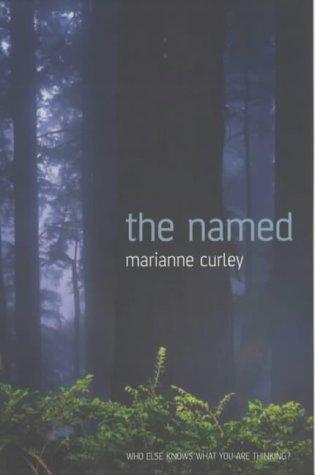
The Named – Marianne Curley
Fiction, Fantasy, YA; ISBN 1-58234-913-4; Bloomsbury, 2002.

For once, the review blurb at the back had been accurate. It is from Kirkus Review (I don’t know this publication though) and it says:

“Swashbuckling time-travel plus soap-opera relationships make for a page-turning start to a promised trilogy… An ongoing guilty pleasure.”

Yup, that sums up what I think of this book so neatly that I just stop right here… but then, I don’t want to be accused of plagiarizing another person’s review.

In my own words, I just will describe The Named as a decent read. Not a must-read but it is a good book that can be absorbed as an in-between. It has all the right ingredients for a fantasy adventure YA book – exciting action, good nicely-plotted fantasy story, characters that aren’t annoying (only slightly so), even a hint of budding romance (but not so much). By the end of the book, I’m searching Bookmooch to see if there are copies of the second and third book out there. Yet I’m still giving this one an imperfect score.

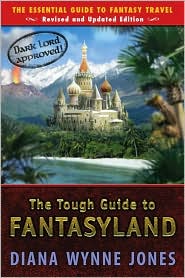
The problem is that the story is predictable and the book is rife with fantasy clichés (for more information, I suggest The Tough Guide to Fantasyland, Diana Wynne Jones' very excellent 'travel guide'). Time travel, hidden worlds, nine chosen ones as destined saviors – yes, all the familiar and comfortable fare. Even the six of the nine chosen saviors (gods, nine is so Lord of the Rings) is formulaic – the rugged handsome young leader, the Elvin-like almost-immortal guide/mage, the angst-ridden haunted warrior, the jokester, the doubter, and right down to the pure-of-soul female cleric-err, healer. As in any typical fantasy yarn, most of the characters are underdeveloped, to make way for the adventure-driven plot. Despite this, the book isn’t that bad – it’s just that a true-blue fantasy reader might find herself a little restless, that’s all.

4 out of 5


|
2

A deliberate hit

Posted by Marie on Friday, March 20, 2009 in , , , ,
Cirque du Freak: A Living Nightmare (Book 1) – Darren Shan
Fiction, Horror, Children; ISBN 0-316-90571-2; Little Brown, 2000.

Most boys of any age like the icky the bloody, and the gross – and Darren Shan would know that all too well, or he wouldn’t had wrote this long novel of 13 parts.

Now you might think that I didn’t like the book; I did. The book was fun and simple (too simple in the first few chapters that it almost had that talking-down tone that many children’s book fall on all too often). Despite the easy wording, the action was fast-paced, the characterizations are satisfying, and the macabre (but not too much) details are mesmerizing. The protagonist, Darren Shan is a boy that any kid of the same age can very well relate to and sympathize with.

This is just the prep of the long “Saga of Darren Shan”, and it shows. I have nothing against multi-book serials; just as long as each part is satisfying by itself – needless to say, this one failed me. The bare story should had been fleshed out, or better yet, the first three books should had been combined (of course, the publishers won’t do that; any savvy book marketer would be horrified to waste profit).

I did hear that the saga gets better along the way. I don’t doubt that – I’m sure I’m going to enjoy books 2 to 13 too. But everything had the aura of being too calculated, like anything less than fun is going to be harmful to the revenues. This is, after all, a budding franchise which, by the looks of the things – including the upcoming movie and the increasing number of fans, both young and old – wouldn’t be waning any time soon.

3 out of 5 stars


|
0

Deliciously good fantasy

Posted by Marie on Friday, February 27, 2009 in , , , ,
Coraline – Neil Gaiman
Fiction, Fantasy, Young Adults / Children; ISBN 0-380-80734-3; HarperTrophy, 2003.

Let’s face it. Neil Gaiman is a darn good storyteller and the people to complain that his awards were the results of just being popular clearly don’t know what they are talking about. But I have to be honest here – despite being a fan, I only know him for his graphic novels, with the large bulk from his multi-awarded Sandman series, and a smattering of his Marvel projects. This is my first time reading a pure text-based Gaiman work.

And I simply loved it. While it is obviously a children’s book, anyone who can read and love fantasy and all its trappings – quirky characters, wonderland settings and curveball-kind of plot turns – would surely be swept away. It is deliciously creepy to adults, and I imagine it to be scarier to the kids. But it never patronizes the young readers, like many YA and children’s books tend to do. It also doesn’t insult their intelligence and capability to handle strange and/or frightening story twists.

Many of the acclaims and blurb compared Coraline to the Narnia series and Alice in the Wonderland, of which Gaiman obviously borrowed heavily from (Hidden doors? Passageway to another world? Talking cat? A lost girl?). If the story isn't original, what made it a good read then? Well, to answer myself, Gaiman's cleverness springs from hpw he weaves these familiar threads into something that looks inventively new, even if it’s really is not. He is simply a very decent writer who knows how to control and discipline his work into a finely-tuned novel.

I really shouldn’t end this review without saying anything about Dave McKean. McKean and Gaiman had been working together since the Sandman days, and the comfortable relationship between the two shows in their output. While I don’t know the first thing about giving critiques on illustrations, I do like McKean’s quirky and messy style, which compliments Gaiman’s weird story.

Give this book all the stars that you can dole out – it deserves every last one.

Should be given more than 5 out of 5


|
0

Jack of Shadows by Roger Zelazny

Posted by Marie on Sunday, January 04, 2009 in , , ,
Jack of Shadows - Roger Zelazny ISBN: 0-802-75535-6; Science Fiction/Fantasy; Signet, 1971.


As a bibliophile, I thought I have the ability to judge the enjoyability of reading a particular book from only its cover and the back cover blurb, especially if it is a science fiction or fantasy novel. Well, this book (which I rescued from the garbage bin via Freecycle) had blown that self-image to smithereens.

The book tells of a world that had stopped rotating on its axis. The half of the planet bathed in light lives in a world of science and technology similar to ours, while the dark half lives in a world where magic rules. The titular character is a darksider, whose other alias, Shadowjack the Thief, bears testament to his magical ability (i.e. he draws his power from shadows) as well as his profession (a compulsive thief). The story tells of his death and resurrection, his quest for vengeance from those that did him wrong, his exile from the dark into the lightside, and his search for the powerful Key that was Lost, Kolwynia. After obtaining the Key, he eventually rose to power and ruled all of the darkside. But his actions, especially against the other darkside lords, had doomed the world, and thus he have to find a way to save the planet.

The mark of a true speculative fiction writer is the ability to paint alien landscapes, fantastical worlds and unusual characters in such way that readers will be helplessly hooked in this strange new world. Thus, mark of a brilliant speculative fiction writer is doing the latter without falling prey to predictability and clichés. While I recognize that Roger Zelazny is one of the best-known speculative fiction writers, I had made the gross mistake of labeling him as a fluff writer, his novels as fun but cheap, dime-store stock. I was wrong, and "Jack of Shadows" had forcibly put me in place.

The story is a novella and many would complain that it is too densely packed and the ending is too open-ended. While I do not think that the story is too rushed, I would have loved it to be longer, or better yet, have a sequel, just for the pleasure of reading more about Jack and his world. While Jack is complex character, the secondary ones could have been better if they were more fleshed out. The best aspect of the story, aside from Jack himself, is the characterization of the world - a hybrid of both typical science fiction and fantasy settings, vaguely formulaic but somehow, in its totality, it is not.

All in all, while I would recommend "Jack of Shadows" to other science fiction and fantasy readers, I would not suggest it to those new to the genre (who would be lost to the fast-paced and unpredictable plot), nor to those that require their science fiction to be more "science-y". I give this a five out of five stars.

|

Copyright © 2009 opinionated thoughts of a cubicle dweller All rights reserved. Theme by Laptop Geek. | Bloggerized by FalconHive.